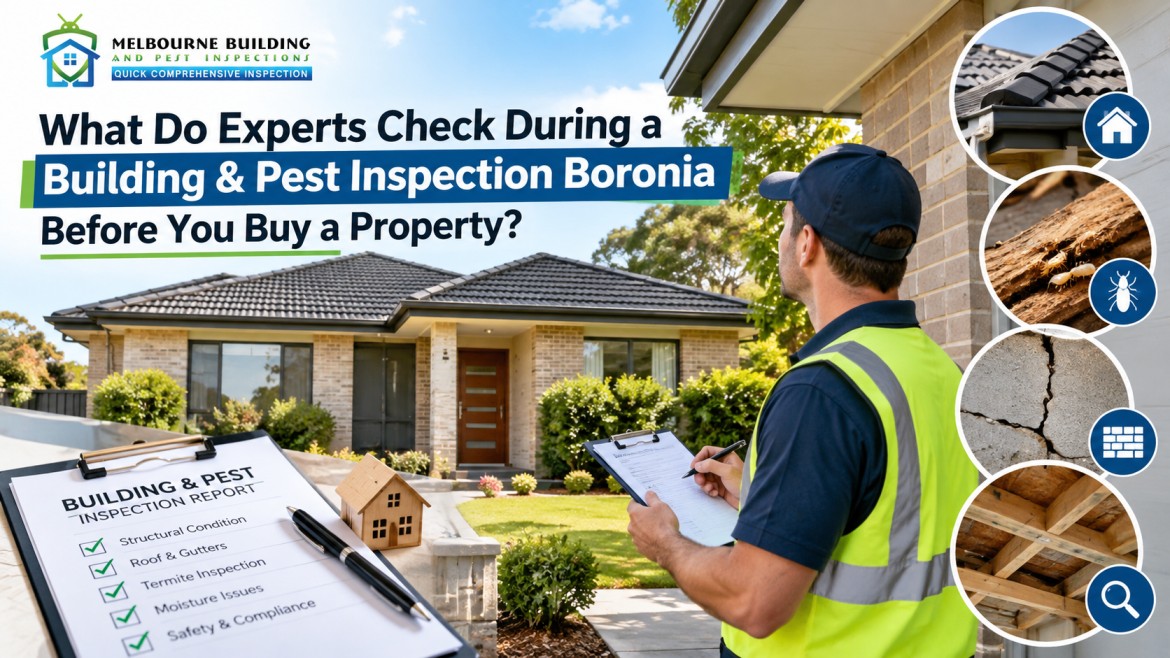
Buying a property is a major financial decision, and a home that looks beautiful during an inspection may still have hidden problems. Fresh paint, clean flooring and attractive landscaping can make a property appear well-maintained, but they do not necessarily reveal what is happening behind the walls, beneath the floors or inside the roof space.
This is why arranging a professional Building & Pest Inspection Boronia before committing to a property is an important step for buyers. A thorough inspection helps identify visible structural issues, moisture damage, timber deterioration, termite activity and other defects that could lead to unexpected repair expenses.
Boronia has a mix of established family homes, renovated properties, older brick houses and newer residential developments. Each property type presents different inspection considerations. For example, an older home may have deteriorating roof materials or ageing drainage, while a renovated property may have concealed water damage or building work that needs closer attention.
A professional Pre-Purchase Building Inspection Boronia gives buyers a clearer understanding of the property’s actual condition before proceeding with the purchase. It can also help them decide whether further specialist investigations, repair estimates or discussions with the seller are necessary.
But what exactly do inspectors examine, and how can their findings influence your buying decision?
Let’s explore the important areas covered during a building and pest inspection, the warning signs buyers should understand and the practical steps to take after receiving the inspection report.
A property inspection is more than a quick check of walls, ceilings and floors. It is a systematic assessment of accessible building components and potential timber pest issues that may affect the property’s condition, safety and future maintenance costs.
During a Building & Pest Inspection Boronia, inspectors generally assess two important areas:
These assessments are complementary but not interchangeable. A property may have a sound-looking structure while containing concealed termite damage. Similarly, a house may show no visible pest activity but have moisture problems that create favourable conditions for future infestations.
Consumer Affairs Victoria recommends obtaining independent professional building and pest inspections before purchasing a property. It also advises buyers to obtain their own reports rather than relying on documents supplied by the selling agent or vendor.
For buyers, the purpose is simple: understand the condition of the property before making a significant financial commitment.
A professional Building Inspection Boronia usually begins with an assessment of the property’s accessible structural and non-structural components.
The inspector looks for visible defects, signs of deterioration and building conditions that may require further investigation.
The foundation supports the entire building. Problems in this area can affect walls, floors, doors and windows.
Inspectors look for:
For example, a buyer viewing an older brick house in Boronia might notice diagonal cracks extending from a window corner. These could be associated with building movement, although cracking can also result from other causes.
An experienced inspector considers the crack’s location, pattern, width and surrounding conditions before deciding whether further assessment is appropriate.
Not every crack indicates a serious structural problem. However, significant or changing cracks should never be dismissed without understanding their cause.
Roof defects can become expensive when left unnoticed. Water entering through damaged roof materials may affect ceilings, insulation, timber framing and electrical components.
During the inspection, accessible roof areas may be examined for:
Inspectors may also examine the roof cavity where safe and reasonable access is available.
A particularly important detail is evidence of previous repairs. Fresh paint or recently replaced ceiling sections may deserve closer attention if there are surrounding water stains or damaged materials.
Internal finishes can reveal problems that are not immediately obvious during a property viewing.
Inspectors typically examine accessible areas for:
One practical example is a ceiling with a recently painted section near a bathroom. Although the surface may look clean, the inspector may investigate whether there are signs of an earlier plumbing leak.
The objective is to identify observable defects and explain whether they appear cosmetic, maintenance-related or potentially significant.
Floor condition can provide useful information about the building’s structural performance and moisture conditions.
Inspectors may check:
For properties with suspended timber floors, subfloor ventilation deserves particular attention. Restricted airflow and persistent dampness can contribute to timber decay and create conditions favourable to timber pests.
However, concealed supports and inaccessible areas cannot always be assessed during a standard visual inspection.
A Pest Inspection Boronia is particularly important because timber pests can damage building materials without creating obvious external signs.
Termites are especially concerning because they may consume timber internally while leaving a relatively thin outer surface intact.
Victoria’s Building and Plumbing Commission recommends obtaining an inspection from a properly qualified, experienced and insured pest inspector before buying a house.
A professional Termite Inspection Boronia focuses on identifying evidence of active termite activity, previous infestations, timber damage and conditions that may encourage future attacks.
Inspectors commonly look for:
Mud tubes are particularly important warning signs. Termites construct these protective pathways to travel between their nest and food sources.
An inspector may also examine accessible garden structures, retaining walls, fences and nearby timber materials where these fall within the agreed inspection scope.
Practical example: Imagine purchasing a house with a timber deck at the rear. The deck appears well-maintained, but some supporting sections are close to damp soil. An inspection may identify conditions that increase timber pest risk even if active termites are not visible.
This distinction matters because a report should explain both actual evidence of pest activity and conditions that could make the property more vulnerable.
Termites are not the only organisms that can damage timber.
Inspectors may also look for signs of wood-boring insects and fungal decay.
Common warning signs include:
Fungal decay is often associated with persistent moisture. Timber that remains damp for extended periods may gradually lose its strength.
Where damage is identified, the inspector may recommend further investigation to determine its extent and whether replacement or specialist treatment is necessary.
Sometimes the most valuable inspection findings are not active infestations but the environmental conditions that make future problems more likely.
Inspectors may identify:
The Victorian Building and Plumbing Commission also recommends addressing plumbing leaks, maintaining subfloor ventilation and avoiding soil or garden materials covering termite inspection zones.
A Structural Defect Inspection Boronia helps identify visible defects that may affect a property’s stability, functionality or long-term condition.
Structural concerns deserve particular attention because repair requirements can be more complicated than ordinary cosmetic maintenance.
Inspectors examine areas where movement may be visible, including:
For example, a small hairline crack in plaster may be a minor appearance issue. However, widening diagonal cracks accompanied by sticking doors and uneven floors may indicate a more significant movement concern.
An inspection report should explain the observed condition and recommend specialist assessment where necessary.
Retaining walls help manage changes in ground level, particularly on sloping residential blocks.
Inspectors may look for:
A damaged retaining wall can create additional concerns if it supports soil near the house, driveway or neighbouring property.
Renovations can improve a property’s appearance and functionality, but poorly executed building work may introduce hidden problems.
Inspectors may identify visible signs of:
A standard pre-purchase inspection does not automatically confirm that renovations were approved or comply with building regulations.
Buyers should separately check relevant building permits, approvals and documentation with the appropriate authorities.
Moisture problems are among the most important issues to investigate before purchasing a property.
Water can enter a building through roof leaks, damaged plumbing, failed waterproofing, poor drainage and deteriorating external materials.
During a Building & Pest Inspection Boronia, inspectors may look for:
Bathrooms and laundries experience frequent water exposure, making them important inspection areas.
Inspectors may examine visible surfaces around:
For example, deteriorating grout around a shower may allow water to penetrate surrounding materials. This does not automatically prove that waterproofing has failed, but it can indicate a condition worth investigating.
A standard visual inspection cannot confirm the complete condition of concealed waterproofing membranes or hidden plumbing.
Poor drainage can create long-term problems around foundations and subfloor spaces.
Inspectors may check whether:
Small drainage issues may become more serious when water repeatedly accumulates near the same section of the house.
A thorough Property Inspection Boronia should consider more than the interior of the home.
External areas can reveal drainage issues, deterioration and defects that may affect the property’s overall condition.
Depending on the inspection agreement, accessible external components may include:
| Property area | What inspectors look for |
| External walls | Cracks, movement and deterioration |
| Gutters and downpipes | Damage, blockages and leaks |
| Driveways and paths | Cracking and uneven surfaces |
| Decks and verandas | Timber decay and structural movement |
| Retaining walls | Leaning, bulging and cracking |
| Fences and gates | Deterioration and visible instability |
| Garage and carport | Roof, wall and floor defects |
| External drainage | Water accumulation and poor drainage |
For buyers, this assessment can be useful when comparing two properties.
A house with attractive interiors may require significant external maintenance, while another property with slightly dated finishes may have better-maintained structural components.
Inspectors may also assess accessible garages, sheds and other structures included in the inspection agreement.
These areas can reveal:
Buyers should confirm which additional structures are included before booking the inspection.
Building inspectors may identify obvious defects or concerning conditions associated with visible building services.
However, a standard building inspection is not a substitute for specialist electrical, plumbing or gas testing.
An inspector may note visible concerns such as:
A licensed electrician should investigate concerns requiring electrical testing or repair.
Visible plumbing components may be examined for:
Hidden pipework, underground drainage and concealed plumbing connections generally require separate specialist investigation.
Where included in the inspection scope, the inspector may observe visible conditions around heating and cooling equipment, ventilation openings and accessible components.
However, this does not necessarily mean that mechanical systems are fully tested for performance or efficiency.
Buyers should arrange specialist servicing or testing if the property’s heating, cooling or other essential equipment is an important part of their purchasing decision.
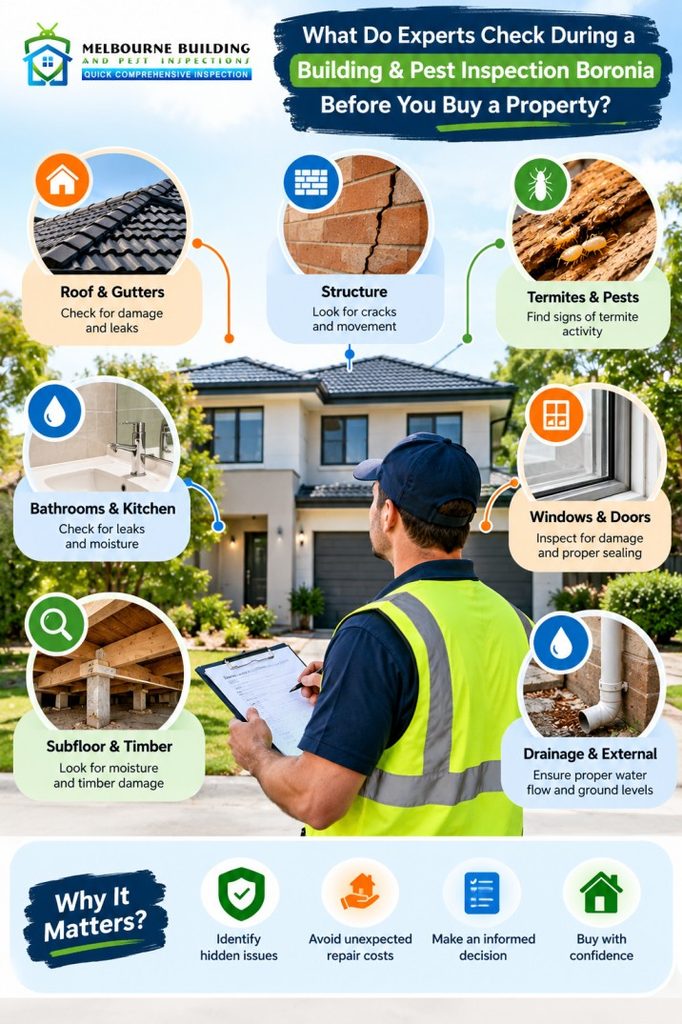
A professional Pre-Purchase Building Inspection Boronia should provide more than a collection of photographs.
The written report helps buyers understand the defects identified during the inspection and decide what action may be necessary.
A useful report generally explains the following:
Major defects are issues that may require significant rectification to prevent unsafe conditions, loss of functionality or further deterioration.
Examples may include:
Minor defects are generally less serious but may still require maintenance or repair.
Examples include:
Minor defects should not automatically be ignored. Several maintenance issues can become expensive if left unattended.
Reports may also identify visible safety-related concerns, such as damaged stairs, unstable handrails or other potentially hazardous building conditions.
Photographs help buyers understand exactly where defects were observed.
Recommendations should explain whether:
A Building Condition Report Boronia is particularly useful when buyers need a clear record of the property’s observable condition and potential maintenance requirements.
It should also identify areas that were inaccessible or excluded from the inspection.
A report is a snapshot of accessible conditions on the inspection date, not a guarantee that the property is defect-free.
Yes. A Pre-Settlement inspection Boronia serves a different purpose from an initial pre-purchase building and pest inspection.
A pre-purchase inspection is intended to help buyers understand the property’s condition before committing to the purchase.
A pre-settlement inspection generally occurs closer to settlement. Its purpose is to check that the property is in the expected condition under the contract and to identify changes since the buyer agreed to purchase it.
Buyers may check:
For example, imagine that a buyer completed a building inspection several weeks before settlement. During that period, a storm damaged part of the property’s guttering.
A pre-settlement inspection may help identify the new damage so the buyer can raise the issue with their conveyancer or solicitor before settlement.
It is important to understand that a pre-settlement inspection does not automatically replace a professional building or timber pest inspection.
Receiving an inspection report is only the beginning. The next step is understanding the findings and deciding which issues need attention before proceeding.
Here is a practical approach.
Start with issues that could affect structural stability, safety or significant repair costs.
Do not focus exclusively on cosmetic problems such as chipped paint or outdated flooring.
If the inspector recommends consulting a structural engineer, licensed plumber, electrician or specialist pest controller, take that recommendation seriously.
For example, evidence of possible termite activity may require a more detailed investigation to determine whether an infestation is active and how far the damage extends.
Ask suitably qualified contractors to assess significant defects and provide written quotations.
This helps establish a realistic understanding of the potential financial commitment.
Your conveyancer or solicitor can explain how the inspection findings relate to your contract and whether any available contractual options apply.
Do not assume that every inspection finding gives you an automatic right to withdraw from the purchase or demand repairs.
Consider the property’s overall condition, your available budget, repair priorities and willingness to manage future maintenance.
An inspection report should help you make a better-informed decision, not automatically convince you to reject a property.
Buyers can also refer to guidance from Consumer Affairs Victoria when arranging independent inspections and assessing reported defects.
Even careful buyers can overlook important details when purchasing a home.
Avoid these common mistakes:
A viewing helps assess the layout and appearance, but it is not a substitute for a professional inspection.
New kitchens, bathrooms and flooring do not guarantee that the underlying structure is in good condition.
A small water stain may indicate a previous leak or an ongoing moisture problem. Its cause should be understood before making assumptions.
A building inspection and timber pest inspection have different purposes. Confirm that both assessments are included when booking a combined service.
Ask which areas could not be inspected and whether additional access or specialist assessment is necessary.
If you are purchasing at auction, arrange the relevant inspections before bidding. Once a property is purchased at auction, your ability to withdraw may be limited.
A standard visual inspection does not involve opening walls, removing floor coverings or dismantling building components. Hidden defects may remain undetected.
A little preparation can make the inspection process more useful.
Consider these practical recommendations before arranging your inspection.
A useful additional step is to ask the inspector whether the property has an identifiable termite management system and whether its installation or maintenance documentation is available.
Melbourne Building and Pest Inspections can be a useful point of contact for buyers seeking to understand the importance of an independent property assessment and the issues worth considering before purchasing a home in Boronia.
Choosing the right professional is just as important as arranging the inspection itself.
A detailed report should help you understand the property’s condition without creating unnecessary confusion or making unsupported claims.
Before booking, consider the following factors.
Look for an inspector who understands different residential construction styles, including brick veneer, weatherboard, older timber homes and renovated properties.
Experience with different building materials can help an inspector recognise common deterioration patterns and potential problem areas.
Check whether the inspection covers:
Ask about relevant qualifications, experience, professional indemnity insurance and public liability insurance.
For timber pest inspections, check that the person undertaking the assessment has appropriate pest inspection qualifications and experience.
A good report should distinguish between major defects, minor defects, maintenance issues and areas requiring further investigation.
Avoid relying on a report that simply labels a property as good or bad without explaining the observations behind that conclusion.
The inspector should provide an objective assessment based on the property’s observable condition.
A professional should also explain inspection limitations rather than suggesting that every possible defect can be detected.
Purchasing a home requires more than checking its appearance, location and asking price. Understanding the building’s structural condition, moisture levels, roofing, drainage and timber pest risks can help buyers avoid unexpected repair expenses.
A professional Building & Pest Inspection Boronia provides valuable information about the property’s accessible condition and highlights issues that may require maintenance, repair or specialist investigation.
From identifying termite activity and structural movement to checking roof conditions and water penetration, a thorough inspection helps buyers approach property decisions with greater confidence.
The most important step is to arrange an independent assessment, understand the report’s limitations and investigate significant findings before proceeding.
Melbourne Building and Pest Inspections encourages property buyers to make informed decisions by understanding a home’s condition before committing to a purchase. Taking the time to arrange a professional Pre-Purchase Building Inspection Boronia can help you understand potential risks, plan for future maintenance and move forward with greater peace of mind.
A Building & Pest Inspection Boronia generally includes an assessment of accessible structural components, roofing, walls, ceilings, floors, moisture conditions, external areas and visible timber pest activity.
The building component focuses on defects affecting the property’s condition and functionality, while the pest component examines evidence of termites, wood borers, fungal decay and conditions that may encourage timber pest activity.
The exact scope depends on the inspection agreement. Buyers should confirm whether garages, sheds, roof spaces and subfloor areas are included.
A Pre-Purchase Building Inspection Boronia should ideally be arranged before you become contractually committed to purchasing the property.
If you intend to purchase at auction, arrange the inspection before auction day because auction purchases generally have different withdrawal and cooling-off arrangements.
For private sales, discuss the appropriate inspection timing and any inspection conditions with your conveyancer or solicitor before signing the contract.
Allow enough time to receive the written report and arrange further investigations if necessary.
Older properties may contain ageing timber, previous moisture damage and building details that can make termite activity difficult to identify.
A Termite Inspection Boronia helps identify visible evidence of active or previous termite activity, timber deterioration and conditions that may increase the risk of infestation.
Inspectors may examine accessible roof framing, subfloor areas, skirting boards, door frames and external timber structures.
However, the absence of visible termite activity does not guarantee that concealed areas are free from infestation.
If major defects are identified, the inspector should explain their location, visible characteristics and recommended next steps.
For example, significant cracking or signs of building movement may require further assessment by a suitably qualified structural engineer.
Buyers should consider obtaining written repair estimates before making a final purchasing decision.
They should also discuss any contractual implications with their conveyancer or solicitor. Depending on the contract, available options may differ.
A Pre-Settlement inspection Boronia can still be useful even if you have already completed a pre-purchase building inspection.
The earlier inspection records the property’s condition at an earlier point in the purchasing process. A pre-settlement inspection helps identify changes, new damage, missing fixtures or incomplete agreed repairs.
It is not a replacement for a professional building and pest assessment, but it provides another opportunity to check the property’s condition before settlement.