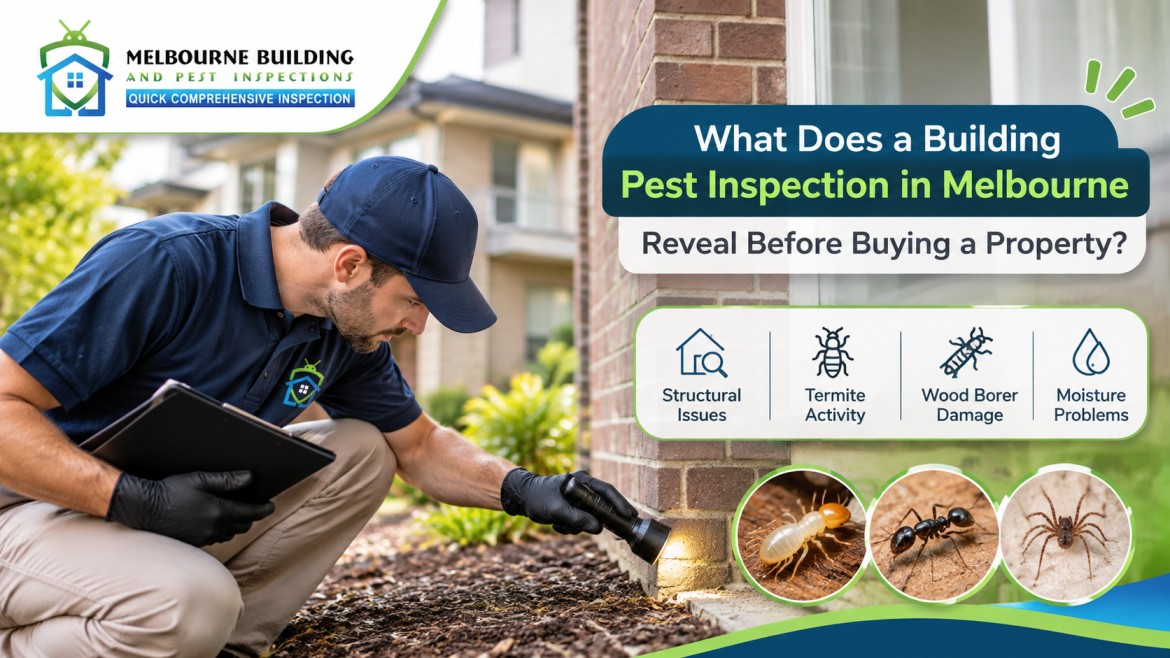
Most buyers spend weeks looking at homes and only two hours checking the one they choose. That two-hour visit often decides whether the purchase becomes a great home or a long repair job. A Building Pest Inspection Melbourne buyers book before they sign shows them what open-for-inspection crowds, styled rooms and fresh paint can hide.
After years of crawling under floors and through roof spaces across the city, we have learned one thing. Every Melbourne home tells a story, and the inspector’s job is to read it. This guide explains what an inspection really reveals, how risks change from suburb to suburb and how to use your report wisely. It also gives you a practical Melbourne Building and Pest Inspection Checklist you can take to your next viewing.
Melbourne has one of the most varied housing stocks in Australia. A single weekend of open homes can take you from a Victorian terrace to a 1960s weatherboard to a five-year-old estate home. Each comes with its own set of risks.
A thorough Building and Pest Inspection Melbourne report adjusts its focus to the home in front of it. That local knowledge is what turns a standard checklist into real advice.
The building side of the inspection follows Australian Standard AS 4349.1. It covers the site, exterior, interior, roof space and subfloor where safe access exists. The main goal is to find major defects that affect safety or structure.
The inspector looks for signs that the home has moved. Diagonal cracks above doors and windows, stepped cracks in brickwork and doors that stick are the classic clues. In homes with a subfloor, they crawl underneath to check stumps, bearers and joists for rot, sinking and poor past repairs. On slab homes, they check the slab edge and use a level on floors where movement seems likely.
Not every crack is a red flag. A hairline crack in plaster is often cosmetic. A crack wider than a few millimetres, or a group of cracks on one side of the home, usually points to footing movement that needs a closer look.
Roofs and wet areas cause more expensive repairs than almost anything else.
The report should also flag safety issues. These include loose balustrades, unsafe decks, trip hazards and missing smoke alarms. In homes built before 1990, inspectors may note materials that look like asbestos. They do not test for it, but they will recommend a specialist check before any renovation.
The timber pest side follows AS 4349.3. A careful termite damage assessment goes far beyond looking for live insects.
Termites eat timber from the inside and leave a thin outer layer intact. A skirting board can look perfect yet crumble under light pressure. Inspectors tap timber, look for mud leads on stumps and slab edges and use thermal cameras or moisture meters to find hidden activity.
A Building Pest Inspection Melbourne report also covers:
In one typical case, a buyer in the eastern suburbs loved a renovated weatherboard home. The inspector found fresh mud leads behind a newly built deck that sat right against the house. The new deck had bridged the termite barrier. The buyer negotiated a full treatment and deck changes before settlement.
Timing can matter as much as the inspection itself.
At auction in Victoria, there is no cooling-off period. Once you win, the contract is binding. Book your inspection several days before auction day so you have time to read the report and get advice on any major issue.
For private sales, a Pre-Purchase Building Inspection Melbourne report can often be made a condition of the contract. This lets you walk away or renegotiate if serious defects appear. The team at Melbourne Building and Pest Inspections often sees buyers book too late, which leaves no time to act on what the report finds.
Use this Melbourne Building and Pest Inspection Checklist when you view a property. It will not replace a professional inspection, but it helps you spot warning signs early.
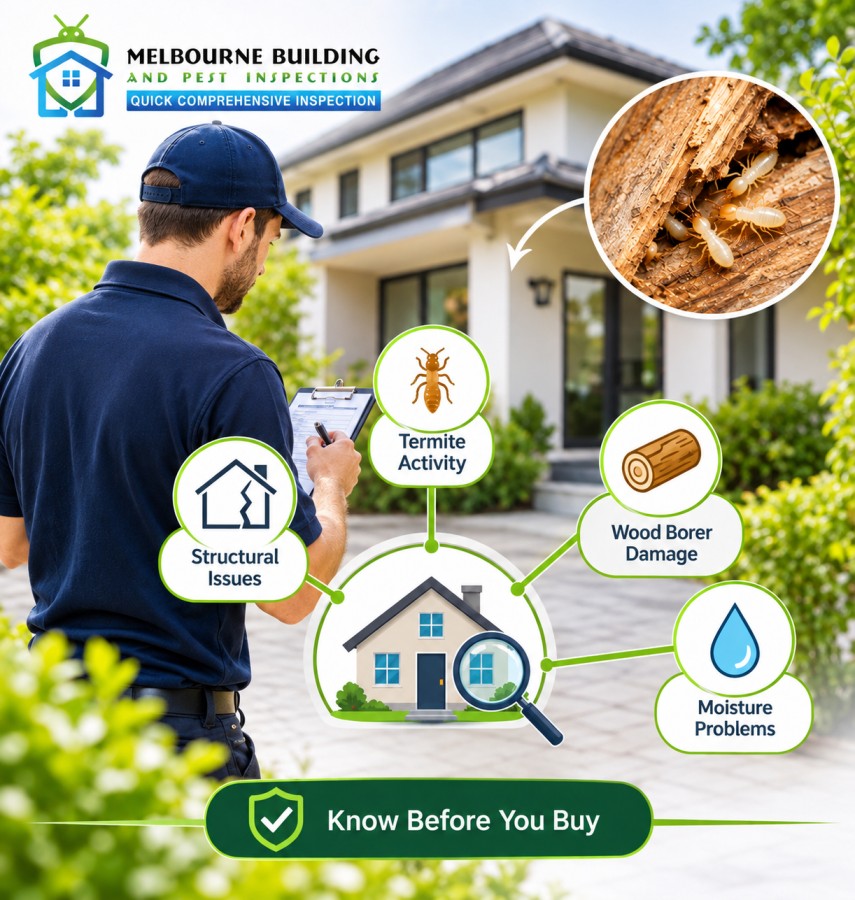
A pre-purchase property inspection report can run to 30 pages or more. Do not panic at the length. Sort the findings into three clear groups.
Then call your inspector. A five-minute conversation often explains more than five pages of notes.
A home can look perfect and still hide costly problems. A detailed Building Pest Inspection Melbourne reveals structural movement, roof and wet area defects, safety hazards and termite damage before you commit. Use the checklist above to view homes with a sharper eye, then let a qualified inspector confirm what you see.
Book your Building and Pest Inspection Melbourne early, read the full report and ask questions about anything unclear. If you want a detailed, independent report from inspectors who know homes across the city, Melbourne Building and Pest Inspections can help you buy with confidence.
A Building Pest Inspection Melbourne covers the site, exterior, interior, roof space and subfloor where safe access exists. The building side follows AS 4349.1 and reports on structural defects, safety hazards and overall condition. The pest side follows AS 4349.3 and checks for termites, borers, wood decay and conditions that attract pests. You should get a written report with photos and clear notes, usually within 24 hours of the visit.
Most inspections of a standard three or four bedroom home take 90 minutes to two hours on site. Older homes with large subfloors, double-storey homes and properties with granny flats or pools can take longer. A Building and Pest Inspection Melbourne report usually arrives within 24 hours, often the same day. If you have an auction or contract deadline, mention it when you book so the timing works for you.
An inspector cannot see through solid walls, because a standard inspection is visual and non-invasive. However, thermal cameras, moisture meters and careful tapping help detect hidden activity and damage. Mud leads on stumps, slab edges and behind downpipes are also strong clues. If the inspector suspects termites behind a wall, the report will recommend further checks. Any invasive test, such as removing linings, needs the owner’s written permission first.
Yes. A Pre-Purchase Building Inspection Melbourne report is just as useful for a near-new home as an old one. Many newer homes in Melbourne’s west and north sit on reactive clay that can move for years after construction. Inspectors also often find failed shower waterproofing, poor roof fixing and drainage that slopes toward the house. Finding these issues before you buy gives you facts to negotiate with or a reason to walk away.
First, stay calm and call your inspector. Ask them to explain the defect, its likely cause and how urgent it is. Next, get an opinion or quote from a qualified builder, plumber or structural engineer. Then decide whether to negotiate, ask the vendor to fix the problem before settlement or walk away. A clear report lets you make a calm, informed decision instead of a rushed one on auction day.