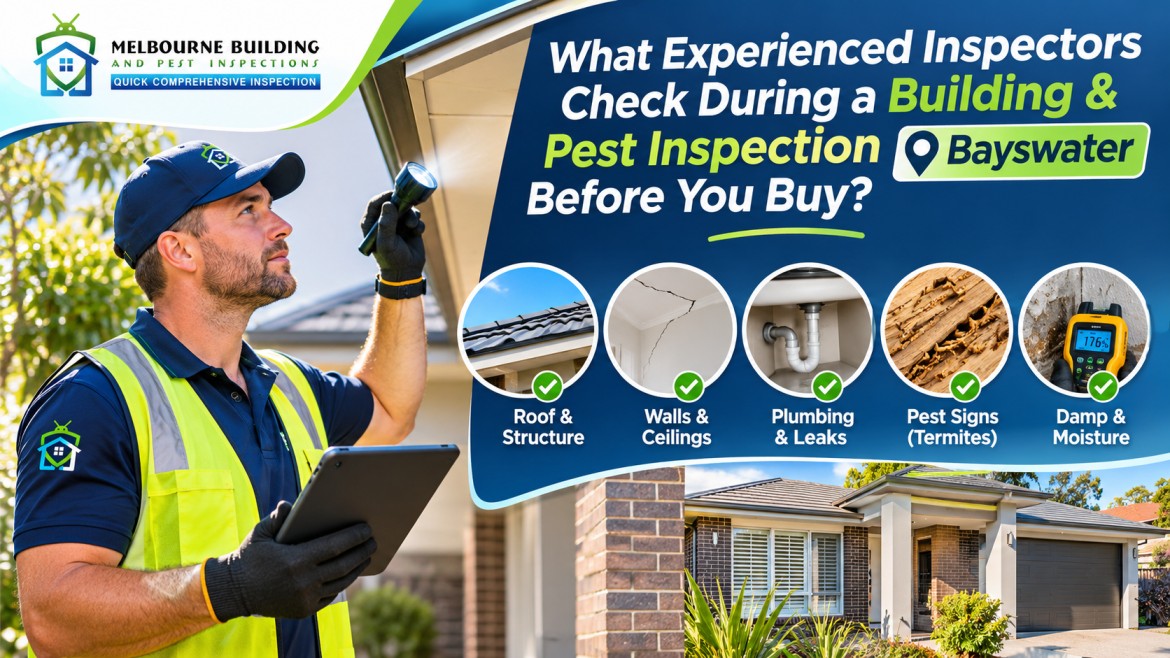
You have found a solid brick home in Bayswater. The garden looks neat, the paint looks fresh, and the open-for-inspection crowd is growing. But fresh paint can hide a lot. A Building & Pest Inspection Bayswater buyers can trust shows you what the agent’s photos never will.
Bayswater sits at the foot of the Dandenong Ranges. Many homes here date from the 1960s to the 1980s. That age, the local clay soil and the leafy, damp backyards create a set of risks that inspectors see again and again. A careful Pre-Purchase Building Inspection Bayswater buyers book early can save them from years of repairs.
This guide walks you through what an experienced inspector actually checks, room by room and from roof to stumps. You will also learn the common mistakes buyers make and how to read your report with confidence.
Every suburb has its own building story. In Bayswater, three local factors shape what inspectors look for.
A standard Building Inspection Bayswater report follows Australian Standard AS 4349.1. The timber pest side follows AS 4349.3. These standards set the minimum scope, but a good inspector goes further and explains what each finding means for you.
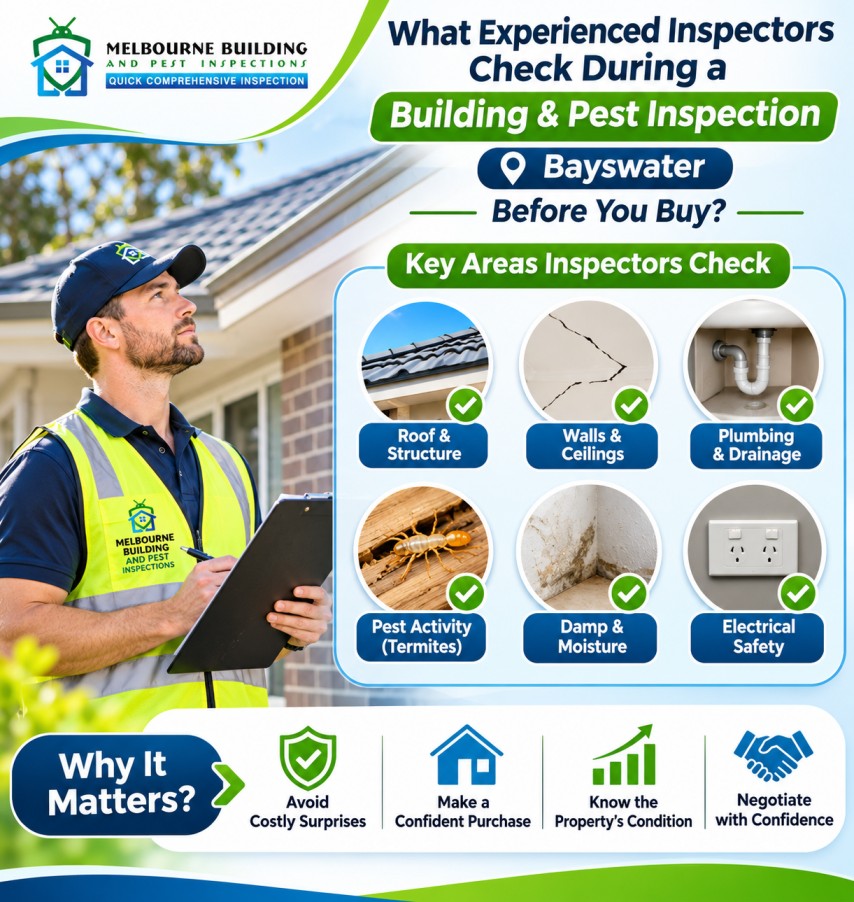
A thorough Building & Pest Inspection Bayswater visit usually takes 90 minutes to two hours for a standard family home. The inspector works in a set order so nothing gets missed.
The inspector starts outside. They walk the full boundary and look at the house as one system.
The roof hides some of the most serious problems. The inspector checks the outside cover first, then climbs into the roof space where it is safe to do so.
Inside, the inspector looks for signs that link back to bigger issues.
The subfloor is where many deal-breaking defects hide. The inspector crawls under the house wherever access allows.
They check stumps for rot, sinking and poor past repairs. They look at bearers and joists for decay and borer damage. They also check ventilation, because a damp, airless subfloor invites both rot and termites. In one typical case, a buyer’s home looked flawless upstairs, but the subfloor showed five rotted timber stumps, and termite mud leads on a pier. That one crawl changed the whole negotiation.
A Pre-Purchase Building and Pest Inspection Bayswater buyers rely on must include a proper timber pest check. Termites can eat a home from the inside while the surface looks perfect.
The inspector looks for mud tubes, which are small tunnels termites build to travel. They tap skirting boards and door frames to listen for a hollow sound. Many also use thermal imaging, moisture meters and termite detection radar. These tools find heat, damp and movement behind walls without drilling holes.
A full Timber Pest Inspection Bayswater report covers more than termites. It also reports on:
The report should also note whether the home has a current termite barrier or treatment history. If the paperwork is missing, ask the vendor before you commit.
Timing matters most at auction. In Victoria, buyers at auction get no cooling-off period. Once the hammer falls, the contract is binding. That is why a Pre-Auction Building Inspection Bayswater buyer arranges before auction day is so important.
Book the inspection at least a few days before the auction. This gives you time to read the report, ask follow-up questions, and get a builder or engineer’s opinion on any major issue. Many inspectors at Melbourne Building and Pest Inspections see buyers who leave it to the day before. That rush leaves no room to act on what the report finds.
For private sales, you usually have more breathing space. You can often make your offer subject to a satisfactory inspection. Even so, a Pre-Purchase Building Inspection Bayswater buyers book early still gives them a stronger position at the negotiating table.
A long report can feel scary. Not every defect is a red flag. The key is to sort the findings into clear groups.
Understanding Property Defects and Structural Issues in context is what separates a smart buyer from a nervous one. Ask the inspector to explain any item you do not understand. A good inspector will happily talk you through the report by phone.
Even careful buyers slip up. These are the mistakes inspectors see most often.
Not all inspectors bring the same depth to a Building Inspection Bayswater report. Look for a registered building practitioner with real building experience, current professional indemnity insurance and a sample report you can review before booking.
Ask what tools they use. Thermal cameras and moisture meters add real value. Also ask whether they include photos with clear notes. A report full of vague comments like “monitor” with no reason gives you little to act on.
These tips come from years of crawling through subfloors and roof spaces across the eastern suburbs.
Buying a home is one of the biggest decisions you will ever make. A detailed Building & Pest Inspection Bayswater gives you the facts before you sign, not after. It shows you the true state of the roof, the walls, the subfloor and the timber, and it tells you whether termites have already moved in.
Book early, read the full report and ask questions about anything unclear. If you are heading to auction, make a Pre-Auction Building Inspection Bayswater part of your plan, not an afterthought. For honest, detailed reports from inspectors who know Bayswater homes inside and out, Melbourne Building and Pest Inspections can help you buy with clear eyes and full confidence.
A Building & Pest Inspection Bayswater on a standard three or four bedroom home usually takes 90 minutes to two hours on site. Larger homes, split-level houses and properties with pools or granny flats take longer. After the visit, most inspectors send the written report within 24 hours, often the same day. If your auction date is close, tell the inspector when you book so they can plan around it. Rushing an inspection to save time defeats the whole purpose of having one.
The inspection itself covers the same areas. The difference is timing and risk. A Pre-Purchase Building Inspection Bayswater for a private sale can often be done after you sign, with the contract subject to a good result. A pre-auction inspection must happen before auction day because Victorian auction sales have no cooling-off period. Once you win at auction, you are bound to buy. That means any defect found later becomes your problem, not the vendor’s.
No inspector can see through solid walls, and a standard visual inspection does not involve drilling or removing linings. However, experienced inspectors use thermal imaging cameras, moisture meters and termite radar to detect heat, damp and movement behind surfaces. These tools often find leaks and termite activity that the naked eye would miss. If the tools suggest a hidden problem, the report will recommend an invasive inspection, which needs the vendor’s written permission first.
A vendor’s report can give you a useful first look, but treat it with care. It was ordered by the seller, it may be several months old, and you may have no legal right to rely on it if something goes wrong. Check the date, the inspector’s licence and whether it covers timber pests. Many buyers order their own Building Inspection Bayswater report anyway, because conditions such as leaks and termite activity can change quickly in a few months.
First, do not panic. Ask the inspector to explain the defect, how serious it is and what caused it. Next, get a qualified builder, plumber or structural engineer to confirm the scope of repairs. You can then negotiate the price, ask the vendor to fix it before settlement, or walk away. Before a Pre-Auction Building Inspection Bayswater result shapes your bidding limit, make sure you understand the full repair picture.