Buying a property is one of the largest financial decisions most people make. The excitement of finding the right home can make it easy to focus on the kitchen, bedrooms, location and price while overlooking something that may be hidden behind walls, under floors or around the exterior: termite activity.
This is why a termite inspection for property buyers should be considered before committing to a purchase, particularly where the property has timber structures, landscaping close to the building, moisture issues or a history of pest problems.
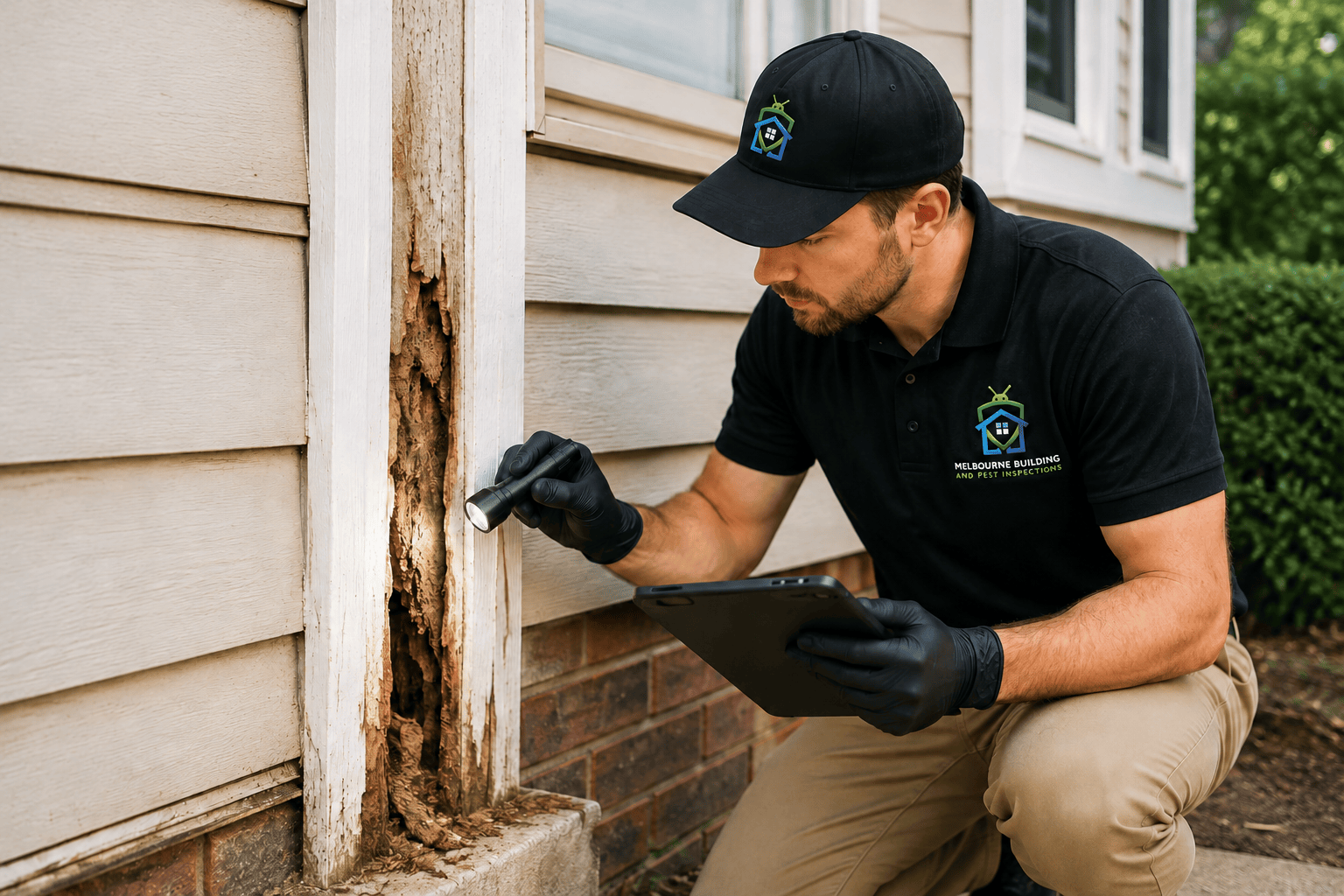
A property can look perfectly maintained while still having concealed termite activity or evidence of previous infestation. Termites do not always leave obvious signs such as visible insects or severely damaged timber. Sometimes the first clues are subtle—mud tubes, hollow-sounding timber, unexplained blistering, damaged skirting boards or conditions that make the property attractive to termites.
The purpose of a pre-purchase inspection is not simply to answer whether termites are present on inspection day. A properly conducted assessment considers current activity, evidence of previous activity, termite damage, accessible timber, moisture conditions and factors that could increase future risk.
For buyers asking, “Is Termite Inspection Before Buying a House really necessary?”, the practical answer is that it can provide valuable information before you commit to a property. It may help you understand potential repair costs, negotiate from a more informed position and decide whether additional investigation is warranted.
Termite problems can be expensive precisely because much of the damage may remain hidden.
A buyer might inspect a house and see freshly painted walls, attractive flooring and renovated rooms. Those improvements do not necessarily reveal what is happening underneath.
Termites can affect:
The cost of dealing with termites varies significantly depending on the extent of activity and damage. Treating an active infestation is only part of the equation. If structural timber has been compromised, repairs may be necessary as well.
A pre-purchase inspection therefore provides another layer of due diligence.
It should not be viewed as a guarantee that a property is termite-free. Instead, it is an opportunity to identify accessible evidence and risk factors before the purchase proceeds.
A Termite Inspection generally involves a systematic examination of accessible areas of the property for signs associated with termites and other timber pests.
Depending on the inspection scope and property, the assessment may consider:
The precise scope matters.
An inspection cannot reliably assess completely inaccessible areas. Furniture, stored belongings, wall coverings, fixed cabinetry, insulation and construction design can restrict visibility.
A trustworthy report should make those limitations clear rather than implying that every part of the property has been examined.
One of the most important distinctions for buyers is between current activity and historical damage.
Finding damaged timber does not automatically mean termites are currently active.
Similarly, failing to find live termites does not prove that the property has never had termite activity.
An experienced inspection looks for multiple indicators.
Potential indicators can include:
Other findings may include:
This distinction can affect how a buyer responds.
If active termites are identified, further investigation or treatment may be appropriate. If only old damage is identified, the next step may instead involve determining whether the underlying conditions have been corrected and whether further monitoring is necessary.
A Termite Damage Assessment focuses on understanding the apparent extent and significance of timber deterioration associated with termite activity.
This is particularly important when the inspection identifies damaged structural components.
For example, imagine a buyer is considering a renovated house. During inspection, evidence of termite workings is found around part of the subfloor. The issue should not simply be recorded as “termite damage.”
The important questions become:
A pest inspector can identify and report pest-related findings, but structural repair decisions may require an appropriately qualified building professional or engineer.
That distinction is important for buyers because pest inspection and building assessment are related but different forms of due diligence.
A Timber Pest Inspection can extend the assessment beyond termites.
Depending on the relevant standards, inspection scope and location, timber pests may include other organisms capable of damaging timber.
For buyers, this broader perspective can be useful because a property’s timber condition is influenced by more than termites alone.
However, buyers should always check exactly what their inspection covers. The term “pest inspection” can be used broadly, and different providers may offer different levels of assessment.
Ask:
The answers can make a meaningful difference to the usefulness of the report.
A Termite Risk Assessment considers not only evidence of pests but also environmental and structural conditions that may make future termite activity more likely.
Examples can include:
A home does not need to have active termites for these conditions to matter.
For example, a downpipe may discharge water directly beside an external wall. Even if no termites are found, correcting the drainage issue could reduce a moisture-related risk.
This is one reason buyers should read the entire report rather than searching only for the words “termite” or “no termite activity.”
Although a professional inspection provides a more systematic assessment, buyers can remain alert to visible warning signs during their property visits.
Termites may construct protective pathways along surfaces. Visible tubes can be an important reason to seek further assessment.
Timber that sounds unusually hollow when lightly tapped may warrant investigation, although this is not definitive proof of termite activity.
Some forms of timber deterioration can create unusual surface appearances.
Soft, deteriorated or visibly damaged skirting boards should not automatically be attributed to termites, but unexplained damage deserves attention.
Movement can have many causes, including humidity, settlement and ordinary building movement. However, unexplained changes combined with other warning signs may justify further investigation.
Where accessible, the subfloor can provide useful information about moisture, ventilation, timber condition and potential pest entry points.
Renovation does not automatically eliminate termite risk.
In some cases, cosmetic improvements can make previous problems less obvious.
Fresh paint may cover marks. New flooring may restrict access to older timber. Landscaping may be installed close to walls. Extensions can create new junctions and moisture-management challenges.
This does not mean renovated homes are inherently problematic.
It simply means buyers should not assume that a property’s modern appearance is evidence of sound pest history.
A comprehensive Termite Inspection for Home Buyers should consider the building as a system rather than judging risk from its appearance alone.
The inspection process varies according to the property and provider, but buyers can generally expect a structured assessment.
The inspector considers the building design, accessible areas and visible environmental conditions.
Accessible rooms and timber elements may be assessed for visible evidence of pest activity or damage.
The inspector examines accessible external areas, looking for signs of activity and conditions that may contribute to pest risk.
Where safe and reasonably accessible, these areas can provide valuable information about timber condition and moisture.
Where appropriate, moisture readings and observations may help identify conditions associated with increased risk.
The findings should be documented clearly, including identified evidence, limitations, and recommendations for further investigation where necessary.
Do not panic, but do not ignore the finding.
The correct response depends on what was discovered.
If active termites are identified, ask the inspector to explain:
If significant damage is present, obtain appropriate specialist advice before making assumptions about repair costs.
A termite finding does not automatically mean the property should be abandoned. Some termite problems can be treated and managed.
The key issue is understanding the scope, cause, damage and likely implications before making a financial commitment.
A pest report can provide useful evidence when discussing a property’s condition.
Suppose a buyer discovers active termite activity and damaged timber before settlement.
Rather than relying on a vague statement such as “the house has termites,” the buyer can use the documented findings to discuss appropriate next steps with the seller.
Depending on the contract and jurisdiction, possible options may include:
Legal and contractual rights vary, so buyers should obtain appropriate conveyancing or legal advice before relying on an inspection report to alter a purchase agreement.
A general building inspection and a pest inspection may have different objectives and scopes.
Buyers should confirm exactly what is included rather than making assumptions.
Price matters, but scope matters too.
A cheaper inspection may not provide the same level of access, reporting or assessment.
A report may state that certain areas were inaccessible.
That limitation is important.
An inaccessible subfloor or roof void means there is less information about those areas, not evidence that they are free of pests.
These statements are not equivalent.
An inspection reflects the observable conditions at the time and within the inspection scope.
Once ownership has transferred, discovering significant concealed pest damage can create a very different financial situation.
Pre-purchase due diligence gives buyers more information before they are fully committed.
Before booking an inspection, consider asking:
Clarify whether the service includes internal, external, subfloor and roof void areas where accessible.
Do not assume every timber pest is automatically covered.
A useful report should clearly identify areas that could not be inspected.
Ask whether the provider recommends further investigation, treatment or specialist assessment.
This distinction can be critical when interpreting findings.
It is easier to assess a property’s problems objectively before you have mentally moved into it.
Do not focus only on the summary.
Limitations, environmental conditions and recommendations can be just as important as the headline finding.
Ask for documentation where previous termite treatment or timber replacement is mentioned.
Termite risk and moisture management can be closely connected. Leaks, drainage problems and damp areas should not be dismissed.
If structural timber appears significantly damaged, pest findings may need to be considered alongside a building or structural assessment.
The cheapest property is not necessarily the cheapest property to own.
A purchase price should be considered alongside foreseeable maintenance, repair and pest-management requirements.
For buyers, the value of an inspection comes from reducing uncertainty.
It cannot identify every concealed defect, and it cannot guarantee that termites will never appear after the inspection. However, it can reveal evidence and risk factors that may otherwise remain unnoticed.
Consider two properties with similar prices.
Property A has no significant pest findings and no obvious conducive conditions.
Property B has evidence of termite activity, damaged timber, and persistent moisture problems.
Without an inspection, the buyer may consider both homes comparable.
With an inspection, the buyer has additional information that can influence the decision.
That is the real purpose of Termite Inspection Before Buying a House: not to create a false sense of certainty, but to improve the quality of the buying decision.
Ideally, the inspection should take place early enough in the purchase process to allow time for reviewing the findings and obtaining additional advice.
This is particularly important when:
Timing requirements can depend on the purchase contract and local property process, so buyers should coordinate inspection arrangements with their conveyancer or other relevant adviser.
Buying a home involves more than evaluating its appearance and asking whether the price feels right. Understanding hidden risks can be equally important.
A thorough termite inspection for property buyers can help identify termite activity, previous damage, timber deterioration and environmental conditions that could increase future risk.
The most important lesson is that an inspection should be viewed as a risk assessment, not a guarantee. Even when no active termites are found, buyers should pay attention to moisture, drainage, timber-to-soil contact, access limitations and other factors that may affect future pest risk.
If you are asking “Should I arrange a Termite Inspection Before Buying a House?”, consider the cost of the inspection against the financial commitment involved in purchasing the property. A relatively small due-diligence step can provide information that may influence your negotiations, repair planning, or decision to proceed.
Ultimately, informed buyers are better positioned to understand what they are purchasing. A detailed Termite Inspection for Home Buyers, combined with appropriate building and legal due diligence, can help turn an exciting property purchase into a more informed and carefully considered investment.
A termite inspection is a pre-purchase assessment designed to identify evidence of termite activity, previous activity, timber damage and conditions that may increase pest risk. The exact scope varies by provider and property. It should also identify areas that could not be inspected so buyers understand the limitations of the findings.
Older homes may contain extensive timber components and may have experienced previous moisture, renovation or pest issues. Age alone does not mean a property has termites, but it can make thorough due diligence particularly worthwhile. The inspection can provide information about accessible timber, previous activity and conditions that may require attention.
Yes. Termites can be concealed in inaccessible areas, inside wall cavities, beneath flooring or in other locations that cannot be visually assessed. For this reason, an inspection should never be treated as a guarantee that no termites exist. A good report clearly explains access limitations and recommends further investigation when appropriate.
First, establish whether the evidence appears active or historical and understand where the damage is located. If significant timber damage is identified, consider obtaining further pest, building or structural advice as appropriate. Buyers should also discuss their contractual options with their conveyancer or legal adviser before negotiating changes to the purchase.
Not necessarily. Inspection scopes vary. A termite-focused assessment may concentrate on termites and timber-related risks, while a broader pest inspection may cover additional pests. Buyers should confirm the exact inclusions, inspection areas, reporting standards and limitations before booking the service.