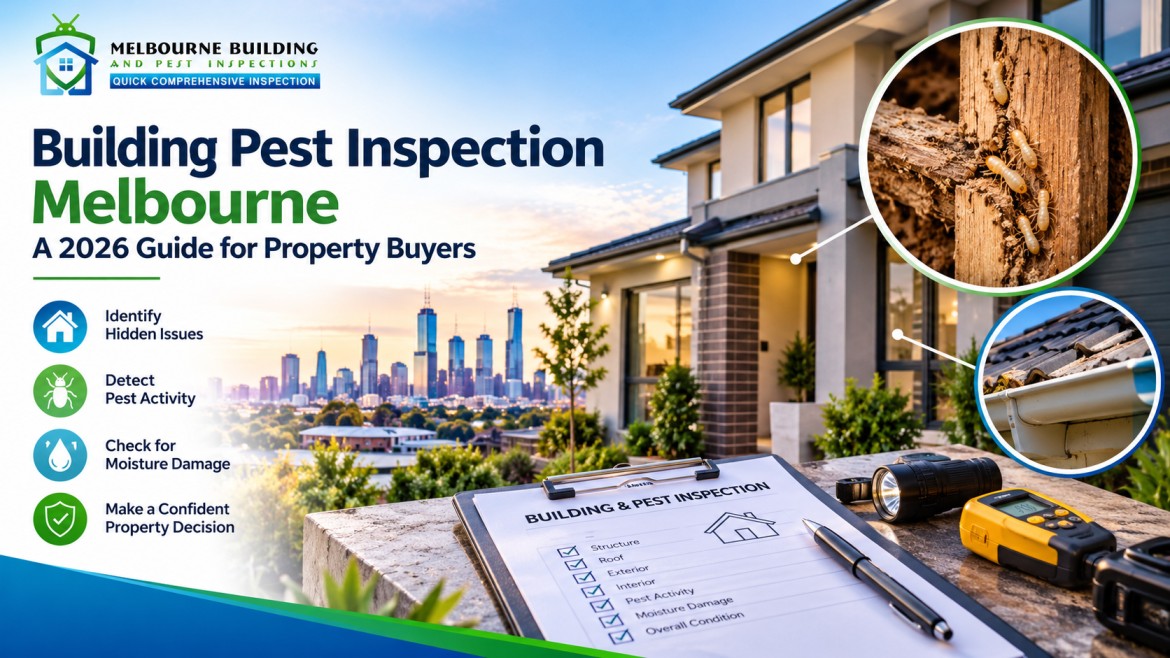
Buying a property is exciting, but a fresh coat of paint, polished floors and attractive staging can sometimes distract buyers from problems that are harder to see. A small ceiling stain may indicate a roof leak, a musty smell could point to hidden moisture, and a few damaged timber sections might signal a pest issue that needs further investigation.
This is why Building Pest Inspection Melbourne is an important consideration before purchasing a house, townhouse or unit. A professional inspection can help buyers understand the property’s visible condition, identify signs of timber pests and building defects, and make more informed decisions before committing to a major financial investment.
Whether you are buying an established family home, considering an investment property or arranging new home building inspections Melbourne, knowing what an inspection covers can help you prepare the right questions and interpret the findings.
This guide explains what to look for, how building and pest inspections work, what can affect the cost, and how to use the findings when making a property decision. It also introduces a practical Building and Pest Inspection Checklist Melbourne buyers can use when preparing for an inspection.
A building and pest inspection combines an assessment of a property’s visible building condition with an examination for signs of timber pests, including termites. The purpose is to identify observable concerns that may affect the property’s condition, maintenance needs or potential repair costs.
The building component generally focuses on accessible areas such as walls, ceilings, floors, roof spaces where safely accessible, external structures and visible drainage conditions. The pest component looks for evidence such as termite activity, damaged timber, mud tubes and conditions that may make timber vulnerable to pests.
The exact scope depends on the inspection agreement, property type, access and the inspector’s qualifications. An inspection is not the same as opening walls, dismantling structures or testing every concealed component.
A property can look well maintained while still having defects that are difficult to notice during a short inspection. Buyers may not recognise early signs of movement, moisture entry or timber damage without relevant experience.
A report can help you:
An inspection does not guarantee that a property is defect-free. It provides a documented assessment of what could be observed at the time, subject to the agreed scope and access limitations.
Melbourne properties vary considerably in age, construction style, location and maintenance history. An older weatherboard home may need particular attention to timber condition and subfloor ventilation, while a newer townhouse may warrant careful assessment of drainage, visible cracking, roof details and signs of moisture entry.
Weather exposure, poor drainage, plumbing leaks and inadequate ventilation can contribute to building deterioration. Timber pests may also affect susceptible timber in buildings, and activity is not always obvious during a casual viewing.
A professional Building Pest Inspection Melbourne assessment helps buyers move beyond appearance and consider the condition of the property more systematically.
Older homes can contain a mixture of original construction and later renovations. Fresh plaster or recently painted walls may make previous repairs difficult to assess visually. Renovated bathrooms and kitchens also deserve attention to visible seals, ventilation, plumbing connections and signs of water leakage.
For example, a buyer viewing a renovated bathroom might notice attractive tiles but overlook a swollen door frame or staining on the adjoining wall. These observations do not automatically prove a leak, but they are reasons to ask the inspector to investigate the accessible area and explain whether further testing is warranted.
New construction is not automatically free from defects. Drainage problems, incomplete finishes, poorly fitted components and visible construction defects can still occur.
Buyers arranging new home building inspections Melbourne should clarify whether they need a pre-handover inspection, a practical completion inspection or an assessment at another stage of construction. Different stages offer different opportunities to identify problems, and some defects may become harder to inspect after finishes are installed.
A building and pest inspection should also be distinguished from a specialist construction-stage inspection. Confirm the scope before booking so the assessment matches the property’s age and stage of completion.
A building inspection usually assesses accessible parts of the property for visible defects, deterioration and maintenance concerns. The inspection report should explain significant observations, their apparent seriousness and any limitations that prevented a complete assessment.
Inspectors may look for cracking, uneven surfaces, staining, movement, damaged finishes and signs of deterioration. The location, pattern and extent of a defect matter more than its appearance alone.
A fine crack in plaster may be cosmetic, while wider or changing cracks around openings may justify further assessment. A visual inspection cannot always determine the underlying cause, so significant movement concerns may require an appropriately qualified building professional or structural engineer.
A roof inspection can be an important part of understanding a property’s condition. Depending on access and the agreed scope, an inspector may assess visible roof coverings, flashings, gutters, downpipes, roof-space conditions and signs of water entry.
Potential concerns include:
Not every roof can be safely accessed, and some roof coverings or concealed areas may not be fully visible. Ask whether the inspection includes a roof-space assessment and how inaccessible sections will be reported.
Where accessible, the inspection may consider visible subfloor conditions, supports, ventilation, moisture indicators and drainage around the building.
Poor drainage can allow water to collect near the building, potentially contributing to dampness and deterioration. In some circumstances, persistently damp conditions can also increase the risk of timber pest problems.
Look for downpipes that discharge close to the structure, ground levels that direct water towards the building, and visible pooling after rainfall. These are warning signs to investigate, not proof of a specific defect.
Windows and doors can reveal useful information about the property’s condition. Difficulty opening a door, damaged frames, failed visible seals or water staining around openings may indicate wear, movement or moisture entry.
External inspections may also consider visible timber components, fences, decks, balconies and other accessible structures. Confirm whether detached garages, sheds, retaining walls and other separate structures are included in the inspection agreement.
Water damage and moisture damage can affect both the appearance and durability of a property. Although the terms are related, the underlying causes can differ. Water damage may follow a plumbing leak or roof leak, while ongoing moisture problems can also arise from poor ventilation, ground moisture or inadequate drainage.
During a property viewing, pay attention to:
These signs can have several possible causes. For example, ceiling staining could be associated with a current leak, an old leak that has been repaired, or another source of moisture. The inspection should document the visible evidence and explain whether further investigation is appropriate.
Persistent moisture can damage finishes, contribute to timber deterioration and create conditions favourable to certain pests. However, a visual inspection cannot always confirm the moisture source or determine how far the damage extends behind a wall or beneath flooring.
Consider a buyer who notices a musty smell in a ground-floor bedroom. The inspector might identify dampness indicators, poor ventilation or visible staining. Depending on the findings, a plumber, building consultant or moisture specialist may need to investigate further.
Practical tip: Ask the inspector to distinguish between an observed symptom and a confirmed cause. This makes the report more useful when deciding which follow-up assessments are necessary.
A pest inspection focuses on visible evidence of timber pests and conditions that may increase the risk of pest activity. In Melbourne, termites are an important consideration because they can damage susceptible timber while remaining concealed behind finishes or inside structural components.
An inspector may look for:
Not every sign of timber damage is caused by termites. Fungal decay, wood-boring insects and ordinary deterioration can produce different types of damage. A qualified inspector should explain what the evidence suggests and whether additional investigation is required.
Some property conditions deserve closer attention, including:
These conditions do not automatically mean termites are present. They are potential risk factors that may warrant maintenance or monitoring.
Termites can sometimes travel through concealed areas, making their activity difficult to detect during a routine visual inspection. Furniture, stored items, wall linings and restricted roof or subfloor access can limit what an inspector can see.
A report should identify these limitations rather than imply that every concealed area has been cleared. If the property has a history of termite activity, ask whether previous treatment records are available and whether a separate pest specialist’s assessment is advisable.
A structured Building and Pest Inspection Checklist Melbourne helps buyers understand what they should observe during a property visit and what to discuss with the inspector. Use it as a preparation tool rather than a substitute for a professional assessment.
Do not enter unsafe roof spaces, crawl under a building or disturb suspected termite workings yourself. Leave technical assessments to appropriately qualified professionals.
The checklist is most useful when it leads to clear questions and informed follow-up action. A list of observations alone cannot establish the cause, severity or repair cost of a defect.
A pre purchase inspection Melbourne appointment should be arranged early enough to allow you to read the report and investigate significant concerns before your contractual deadlines.
Ideally, organise the inspection as soon as access can be arranged and within the timeframe required by your contract. Do not assume that an inspection automatically gives you the right to withdraw from a purchase or renegotiate the price. Those rights depend on the contract and applicable law.
If the property is occupied, ask the agent or vendor to provide reasonable access to relevant areas. Stored items, locked rooms and heavy furniture can restrict the inspection, so it helps to discuss access beforehand.
Tell the inspector about anything you have already noticed, such as a leaking roof, a sticking door, previous termite treatment or a musty room. This information can help the inspector focus on relevant accessible areas without replacing the need for an independent assessment.
If the property has undergone substantial renovation, ask whether available renovation records or permits should be reviewed separately. A standard building and pest inspection is not necessarily a compliance audit or a comprehensive review of building approvals.
A building and pest report records findings within its defined scope. It does not necessarily establish the full extent of concealed damage, provide engineering certification, test every plumbing or electrical component, or guarantee that pests will not appear later.
For example, an inspector may report visible cracking and recommend an engineer’s assessment. The report identifies a concern, but the engineer may be needed to determine the cause and whether structural repairs are necessary.
This distinction helps buyers avoid treating every observation as a confirmed major defect—or dismissing a significant concern because its cause is not yet known.
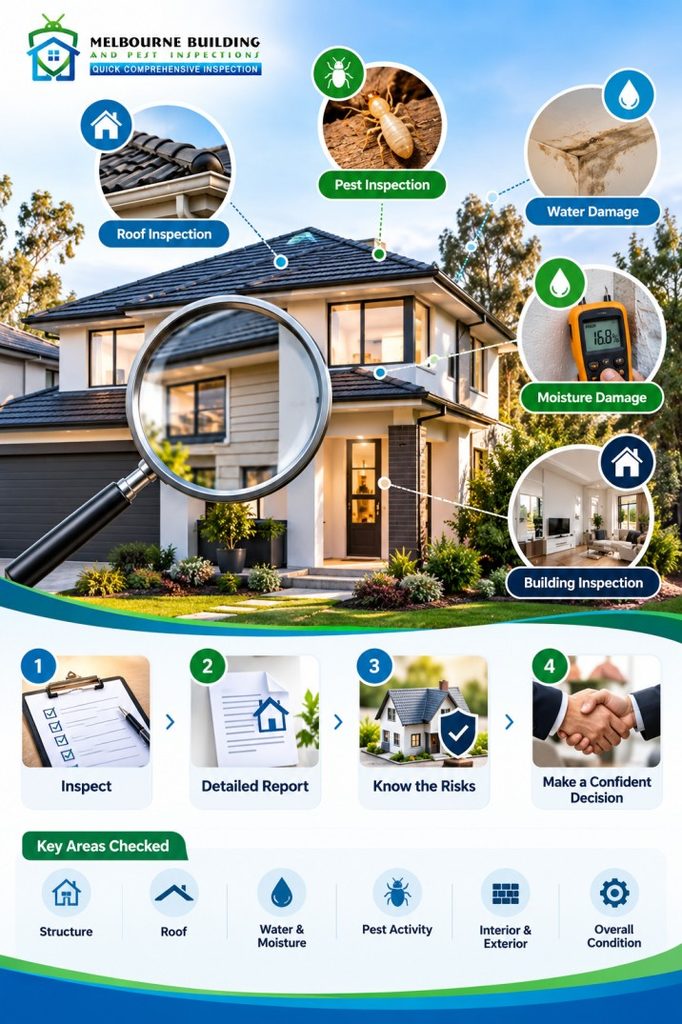
Buying a newly constructed home involves different considerations from purchasing an established property. New materials and finishes can look impressive, but defects may still arise during construction, installation or finishing.
When comparing new home building inspections Melbourne, clarify whether the inspection is intended for a completed property, a construction milestone or a pre-handover review.
Before accepting handover, buyers may want to check visible finishes, doors, windows, flooring, fixtures, drainage and other components included in the agreed inspection scope.
Examples of issues that may be recorded include uneven finishes, damaged surfaces, poorly fitted doors, visible cracking and signs of water entry. The inspector should document observations clearly so the buyer can raise specific items with the builder.
Where possible, stage-based inspections can help identify issues before later work conceals them. The appropriate stages depend on the building contract, construction method and the type of inspection being arranged.
A pre-handover inspection is not necessarily a substitute for inspections required under the building contract or by relevant authorities. Buyers should check their obligations and arrange any necessary specialist assessments independently.
The building pest inspection Melbourne cost can vary depending on the property and the inspection’s scope. There is no single price that applies to every house, townhouse or apartment, and a very low quote should not automatically be considered the best value.
Factors that can influence pricing include:
When comparing quotes, ask each provider the same questions:
The best comparison considers scope, qualifications, reporting quality and access—not price alone. A cheaper inspection may not provide the coverage you need, while a more expensive quote is not automatically evidence of superior service.
Finding the best building pest inspection Melbourne provider involves checking professional competence, transparency and suitability for the property.
Ask about the inspector’s training, relevant licences or registrations where required, professional insurance and experience with the type of property you intend to buy. Building inspection and timber pest inspection may involve different competencies, so confirm that the person undertaking each component is appropriately qualified.
A useful report should explain findings in plain language, identify significant concerns, include supporting photographs where appropriate and disclose inspection limitations.
Be cautious of vague statements that label a property simply as good or bad without explaining the evidence. Buyers need enough detail to understand the issue and decide whether further assessment is warranted.
Choose an inspector who can provide an objective assessment of the property’s condition. Ask how potential conflicts of interest are managed and whether recommended repairs or additional services involve separate providers.
Planning to buy a property? Melbourne Building and Pest Inspections helps buyers understand visible building defects, moisture issues and signs of timber pest activity before making an informed property decision.
When comparing property inspection services Melbourne, distinguish between a standard building and pest inspection and other services, such as structural engineering, plumbing inspections, electrical assessments, pool inspections or construction-stage inspections.
One service does not automatically cover every aspect of a property. Select additional assessments based on the building’s condition, the report’s findings and the risks relevant to your purchase.
Fresh paint, new flooring and renovated bathrooms can improve presentation, but they do not establish that concealed areas are sound. Look beyond finishes and obtain an independent inspection.
New homes can have workmanship issues, drainage concerns and incomplete finishes. Inspection timing and scope should match the stage of construction.
If stored belongings, locked rooms or restricted roof spaces prevent inspection, the report may be unable to comment on those areas. Ask what remains uncertain and whether another visit is possible.
Cracks vary in significance. Their size, location, pattern, history and relationship to other signs all matter. Seek an engineer’s opinion when the report recommends it rather than diagnosing the problem yourself.
An inspection records conditions observed at a particular time. It cannot guarantee that concealed pest activity is absent or that future infestations will not occur. Follow appropriate maintenance and monitoring advice.
Late inspections can leave insufficient time to obtain specialist opinions or repair estimates before contractual deadlines. Arrange access promptly and keep your conveyancer informed.
Experienced property buyers can make inspection findings more useful by taking a systematic approach.
Prioritise findings by significance. Start with major defects, safety concerns, active moisture issues and evidence of timber pest activity. Then review routine maintenance and cosmetic items.
Ask what evidence supports each concern. A clear explanation of the observed condition is more useful than a general warning. Ask whether the finding is confirmed, suspected or requires specialist investigation.
Separate the symptom from the cause. A damp wall is an observation; the source could be plumbing, external water entry, condensation or another issue. Understanding the cause is essential before deciding on repairs.
Obtain professional advice before estimating major repair costs. A general inspection report may recommend further investigation rather than provide a definitive repair specification. A qualified specialist can clarify the likely work and cost.
Keep a written record of follow-up questions. Record the report section, relevant photograph and recommended next step. This makes it easier to communicate with the inspector, agent, builder or conveyancer.
Consider the whole property, not one isolated finding. Several small observations—such as poor drainage, damp timber and damaged external finishes—may collectively justify a closer assessment.
Buying a property involves more than choosing a convenient location or an attractive layout. Understanding its condition can help you prepare for maintenance, investigate potential defects and make a decision that fits your budget and risk tolerance.
A professional Building Pest Inspection Melbourne assessment gives buyers a structured view of visible building concerns and signs of timber pest activity. By understanding the report, checking access limitations and arranging specialist advice when needed, you can make better-informed decisions before committing to a purchase.
Use the Building and Pest Inspection Checklist Melbourne to prepare your questions, compare inspection scopes and organise follow-up assessments. The goal is not to find a property with no maintenance needs whatsoever, but to understand the condition of the property as clearly as possible before deciding whether it is right for you.
A report generally documents visible building defects, maintenance concerns and evidence of timber pest activity within the agreed inspection scope. It may cover accessible walls, ceilings, floors, roof spaces, subfloors, external structures and visible drainage conditions. The report should also identify inaccessible areas and recommend further investigation when necessary. Always confirm the exact scope before booking, because inclusions can differ between providers.
Arrange your inspection as early as practical after you have access to the property, while allowing enough time to review the report and investigate significant concerns before relevant contractual deadlines. Your conveyancer or solicitor can explain the inspection conditions in your contract and what options may be available if defects are identified. Do not assume that an inspection automatically extends a deadline or permits you to cancel the purchase.
The price depends on factors such as property size, construction type, access, location and the inspection scope. Additional testing or specialist assessments may incur separate fees. Rather than comparing prices alone, request an itemised quote and confirm whether the building and timber pest components are both included, which areas will be inspected and when the report will be delivered. This helps you compare providers on a like-for-like basis.
An inspection may identify visible evidence of termite activity or damage, but concealed activity can remain undetected when it is behind wall linings, beneath flooring or in inaccessible areas. The inspector should explain any access limitations and recommend further investigation if warning signs are present. If the property has a known termite history, ask about available treatment records and whether a specialist assessment or additional monitoring is appropriate.
Yes. A new home may still have visible workmanship defects, incomplete finishes, drainage concerns or other issues. A pre-handover inspection can document observable concerns so you can raise them with the builder before or during handover, subject to your contract and applicable requirements. Confirm that the inspector’s service is designed for new construction, because a standard pre-purchase inspection may not cover every construction-stage requirement or compliance matter.