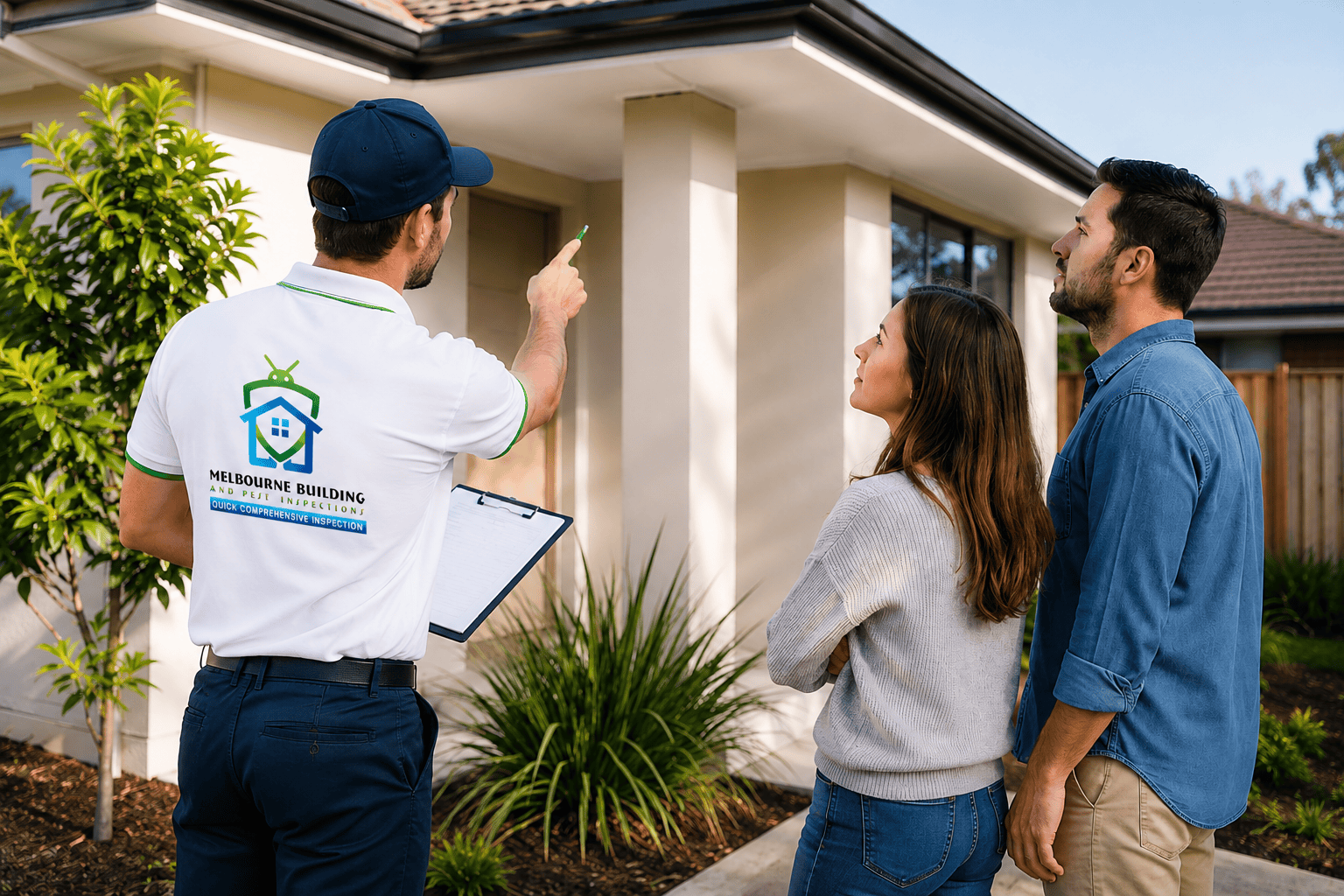
Buying a home in Melbourne is a major financial decision, and a property can look excellent during an open inspection while still hiding expensive problems. Timber damage, termite activity, wood decay, moisture-related deterioration and concealed structural concerns may not be obvious from a quick visual walkthrough.
That is why arranging a Building Pest Inspection in Melbourne before committing to a property can be a valuable part of the buying process. A professional inspection gives prospective buyers a clearer understanding of the property’s visible condition and any accessible signs of pest activity that could require further investigation.
A home does not need to look old or neglected to have pest problems. Termites and other timber pests can affect properties in established suburbs, renovated homes and newer developments. Problems may exist beneath flooring, around wet areas, in roof spaces, near external structures or in other locations that are not readily visible during a standard property viewing.
For buyers, the purpose of a pest inspection Melbourne service is not to create unnecessary concern. It is to reduce uncertainty before a large financial commitment is made.
Whether you are purchasing an established house, considering new home building inspections Melbourne, or arranging a pre-purchase inspection in Melbourne, understanding what a professional inspection can and cannot identify is essential.
A building pest inspection is a professional assessment designed to identify accessible evidence of timber pests and conditions that may contribute to pest activity.
Depending on the inspection scope and property, the inspector may look for evidence associated with:
The inspection is different from simply walking around a property and looking for visible insects.
Termites, for example, can remain concealed for significant periods. An inspector therefore looks for evidence and environmental conditions that may indicate current or previous activity.
A thorough inspection also considers the relationship between the building, its surrounding environment and accessible timber elements.
A property purchase often involves viewing a home for a relatively short period.
During that time, buyers naturally focus on kitchens, bathrooms, bedrooms, landscaping, natural light and overall presentation. Those features are important, but they do not necessarily reveal the condition of concealed building components.
A professional building inspection can provide another layer of information.
It may identify issues such as:
The key benefit is information.
If an inspection identifies a significant concern, the buyer can obtain further advice before finalising the purchase rather than discovering the issue after settlement.
A building inspection and pest inspection are related but serve different purposes.
A building inspection generally focuses on the observable condition of the building and its components within the agreed inspection scope.
A pest inspection focuses specifically on timber pests and evidence or conditions associated with pest activity.
Neither should automatically be assumed to replace the other.
For a buyer purchasing an established Melbourne property, combining appropriate building and pest assessments can provide a more comprehensive understanding of the property’s condition.
This distinction becomes particularly important when a property has older timber elements, previous renovations, moisture problems or landscaping that creates conditions favourable to pests.
Termites can cause substantial damage because their activity may remain hidden.
Unlike a leaking tap or damaged wall that can be immediately visible, termite-related deterioration can occur within concealed timber or other inaccessible areas.
A buyer may therefore see a beautifully renovated room without realising that timber components elsewhere have been affected.
An experienced inspector looks for clues rather than relying solely on finding live termites.
Potential indicators may include:
However, no inspection should be presented as a guarantee that termites do not exist anywhere on a property.
Inspection limitations matter.
Older properties can contain ageing timber, previous repairs and building modifications that deserve attention.
However, newer properties should not automatically be considered risk-free.
Modern landscaping, garden beds, irrigation, drainage conditions and construction details can still create circumstances that warrant inspection.
Moisture is particularly relevant because persistently damp conditions can contribute to timber deterioration and create environments favourable to some pests.
Inspectors may consider accessible areas around:
A moisture issue does not automatically mean pest activity exists, but it can be an important condition to understand.
Fresh paint, new flooring or recently replaced timber does not necessarily reveal what was present before renovation.
Evidence of previous repairs or treatment may provide useful context.
A professional report should distinguish between observed conditions, inaccessible areas and matters requiring further investigation.
A roof inspection can be particularly useful because roof spaces may contain timber framing and areas that buyers rarely examine themselves.
Where access and safety conditions permit, an inspector may look for evidence of:
However, roof spaces can contain electrical equipment, insulation, restricted access, and other hazards. Buyers should not attempt to enter difficult or unsafe areas themselves.
An inspector should clearly identify areas that could not be inspected and explain why.
The biggest benefit is better decision-making.
Imagine a buyer finds a Melbourne home in an attractive location. The kitchen has been renovated, the floors look excellent and the property appears ready to move into.
A pre-purchase inspection identifies evidence of previous timber pest treatment and deterioration in an accessible subfloor area.
That does not necessarily mean the buyer should immediately walk away.
Instead, it creates an opportunity to ask better questions.
The buyer might investigate:
This is a much stronger position than discovering the problem after settlement.
Searching for the best building pest inspection service should involve more than comparing prices.
Buyers should consider the inspection’s scope, reporting quality, qualifications, experience, and communication.
A useful inspection process should make clear:
A professional should also avoid overstating what an inspection can establish.
For example, saying that a property is “100% termite free” would be an unrealistic guarantee for a visual inspection with access limitations.
Trustworthy reporting explains what was actually observed.
There is no single price that applies to every property.
The building pest inspection Melbourne cost can vary depending on factors such as:
Buyers should be cautious about choosing an inspection solely because it has the lowest advertised price.
A cheaper inspection may have a narrower scope or different inclusions.
Before booking, ask what the inspection covers and what documentation will be provided.
The objective should be value and useful information, not simply the lowest fee.
Not necessarily.
A fast building inspection Melbourne service can be useful when buyers have strict property timelines, but speed should not come at the expense of a suitable inspection scope.
A good inspector should have enough time to assess accessible areas systematically and document relevant findings.
For buyers operating under a tight contract or auction timeline, it is better to arrange the inspection early and confirm reporting timeframes rather than waiting until the last minute.
The important question is not simply “How quickly can someone inspect the property?”
It is “Can the inspection be completed properly within the timeframe I need?”
A useful report should be understandable to someone who is not a building professional.
Look for clear information about:
The report should identify relevant visible conditions and explain their significance where appropriate.
If evidence consistent with timber pest activity is observed, the report should describe its location and nature as clearly as possible.
Restricted or inaccessible areas should be identified.
This is critical because buyers need to understand what was not assessed.
Where further investigation by a specialist is appropriate, that should be explained.
A recommendation for additional investigation does not necessarily mean a serious problem exists. It means the available inspection could not establish enough information to reach a reliable conclusion.
An open inspection is designed to showcase the property, not provide a comprehensive assessment of its building condition.
Renovations can improve a property, but cosmetic improvements do not automatically address concealed building or pest conditions.
A low fee can be attractive, but buyers should compare scope and reporting quality as well.
If the inspector cannot access a subfloor or roof space, that limitation matters.
Previous treatment indicates historical information, not necessarily current activity.
The circumstances need to be investigated and interpreted appropriately.
If an inspection is needed before a contractual deadline, leaving it too late can limit the buyer’s options.
Preparation starts before the inspector arrives.
If possible, provide the inspector with relevant information about the property, including known renovations, previous pest treatment and areas of concern.
Buyers should also ask whether the property needs to be accessible throughout the inspection.
Where access is restricted by stored belongings, locked areas or other obstacles, the inspection may have limitations.
A practical checklist includes:
Experience matters because property defects do not always present themselves in obvious ways.
An experienced inspector learns to recognise patterns.
For example, an isolated area of deteriorated timber may have a straightforward moisture explanation. But deterioration combined with particular evidence, access conditions and surrounding timber characteristics may justify further investigation.
The value of experience is not simply spotting a visible problem.
It is knowing when an observation is significant, when it requires additional investigation and when it may be a relatively minor maintenance issue.
That distinction can prevent both unnecessary alarm and false reassurance.
People often assume pest concerns are limited to established homes.
That is not necessarily the case.
New home building inspections Melbourne can help identify construction defects or incomplete work at relevant stages of a new build, depending on the inspection service and scope.
New construction has different risks from an older established property.
The focus may include workmanship, building components, installation quality and visible defects rather than simply age-related deterioration.
Where timber components are involved, appropriate pest considerations may still be relevant.
Buyers and owners should confirm exactly what the inspection includes rather than assuming every “building inspection” covers the same issues.
Water management around a property can influence timber durability.
Poor drainage, leaking gutters, blocked downpipes, persistent dampness and irrigation near structures can contribute to moisture problems.
During an inspection, these conditions can be important because they may help explain timber deterioration or create an environment that increases the risk of future problems.
For homeowners, correcting moisture sources can be an important preventative measure.
For buyers, identifying them before purchase can help provide a more realistic picture of future maintenance requirements.
Ask whether the inspection covers accessible internal areas, external areas, roof spaces, subfloors and other structures relevant to the property.
A professional should be willing to explain areas that cannot be safely or practically inspected.
Ask whether the report documents photographs, findings, limitations and recommendations.
This matters particularly when a property purchase is subject to a contractual deadline.
Ask whether the inspector can explain the finding and recommend the appropriate type of further investigation.
The inspector should not pressure the buyer into a particular purchasing decision.
Their role is to provide relevant technical information.
Finding evidence of timber pests does not automatically mean the property is unbuyable.
Instead, determine the extent and significance of the issue.
Depending on the findings, further investigation may involve an appropriately qualified pest management professional, builder, engineer, or other specialist.
Potential next steps could include:
The important principle is to avoid making a major financial decision based on either panic or false reassurance.
Treat inspections as information-gathering tools.
A professional pest inspection Melbourne buyers arrange before purchase should help answer practical questions about the property’s accessible condition and identify areas requiring further attention.
It should not be viewed as a guarantee that every hidden defect will be discovered.
No visual inspection can eliminate every uncertainty, particularly where areas are inaccessible or concealed.
That is why experienced buyers consider inspection findings alongside:
This creates a much more realistic picture of the property.
The cost of an inspection is small compared with the financial commitment involved in purchasing a home.
More importantly, the inspection may identify information that changes how a buyer approaches the transaction.
It can provide confidence when no significant concerns are identified within the inspection scope. It can also provide an early warning when further investigation is necessary.
In both situations, the buyer gains something valuable: information before making a major commitment.
For anyone considering Building Pest Inspection in Melbourne, that is ultimately the central benefit.
A property can look perfect and still contain conditions that are difficult to identify during a normal viewing.
Timber pests, concealed deterioration, moisture problems and inaccessible areas can all create uncertainty for prospective buyers.
A professional building and pest assessment helps reduce that uncertainty by examining accessible areas, documenting relevant observations and identifying circumstances that may require further investigation.
Whether you are purchasing an established Melbourne home, arranging new home building inspections Melbourne, or completing a pre purchase inspection in Melbourne, the key is to understand the scope and limitations of the inspection.
The best building pest inspection Melbourne buyers can arrange is not necessarily the cheapest or fastest option. It is one that provides a clearly defined scope, competent assessment, useful reporting and transparent explanations.
Ultimately, a professional Building Pest Inspection in Melbourne is about making a better-informed property decision before you become responsible for the home’s future maintenance and repair costs.
A pre-purchase pest inspection can identify accessible evidence of timber pests, previous damage and conditions that may contribute to pest activity. This is valuable because some problems may not be obvious during an open inspection.
If evidence of a significant issue is identified, you have an opportunity to obtain further specialist advice before finalising the purchase. The inspection does not guarantee that every concealed problem will be discovered, particularly where access is restricted, but it can substantially improve your understanding of the property’s observable condition.
Not necessarily. Building and pest inspections can have different purposes and scopes.
A building inspection generally assesses observable building components, while a pest inspection focuses on evidence of timber pests and related conditions. Buyers should confirm exactly what is included before booking because terminology and inspection scope can vary between providers.
For a significant property purchase, understanding whether both areas are covered can help avoid assumptions about what has actually been inspected.
There is no universal price because inspection costs can depend on property size, access, building type, location, inspection scope and whether additional structures are included.
When comparing the building pest inspection Melbourne cost, consider what you receive for the fee rather than choosing solely on price. Ask about the areas inspected, limitations, photographs, reporting, turnaround time and whether further investigation recommendations are included.
A transparent quote should make the scope clear before the inspection takes place.
No inspection should be presented as a guarantee that a property contains no termites.
Termites can occupy concealed or inaccessible areas, and inspection conditions can limit what can be observed. A competent inspector should document limitations and explain any evidence or risk factors identified.
The purpose of the inspection is to identify accessible evidence and conditions requiring attention, not to provide unrealistic certainty about every concealed part of a building.
Do not automatically assume that the property must be rejected.
First, establish whether the report indicates active activity, historical damage or conditions requiring further investigation. Depending on the findings, you may need advice from an appropriately qualified pest management professional, builder or other specialist.
Once the extent of the problem and likely treatment or repair requirements are understood, you can evaluate the issue alongside the property’s price, condition and other characteristics. This gives you a much more rational basis for deciding whether to proceed with the purchase.