
A musty smell in a wardrobe. A hairline crack along the cornice. Or a floating floor that feels a little soft near the back door. However, most buyers walk past these small clues on open day. Experienced inspectors stop and look closer, because small clues often point to big problems. A Building & Pest Inspection Boronia buyers book before they commit is how those clues get properly read.
Hidden Property Defects in Boronia Homes follow a pattern. That is because the cool, damp foothills climate, ageing timber and old renovations all leave marks. Then a fresh coat of paint covers them. So, this guide explains the most common hidden defects, the clues that give them away and what an inspector does to confirm them.
If you are planning to bid at auction, timing matters too. We cover when to book a Pre-Auction Building Inspection Boronia so you have time to act on the findings.
Boronia sits at the foot of the Dandenong Ranges. It is cooler and wetter than many Melbourne suburbs, and that climate works on a house year after year.
A Building Inspection Boronia report prepared under Australian Standard AS 4349.1 looks past the surface finishes. Then the inspector reads each clue in the context of the home’s age, layout and local conditions.
First, here are the defects we see most often in older Boronia homes, as well as the clues that point to them.
| Clue You Can Spot | What It May Mean | What the Inspector Checks |
|---|---|---|
| Cornice cracks and sticking doors | Footing movement or sunken stumps | Crack width, door frames, stumps or slab below |
| Musty smell inside a wardrobe | Mould and damp on a cold external wall | Moisture readings behind cupboards and subfloor ventilation |
| Soft or bouncy floating floor | Rotted boards or joists underneath | Subfloor timbers near exterior doors and wet areas |
| Cracks where an extension meets the house | Weak footings under an enclosed verandah | Footings, wall joins and flashing between old and new sections |
| Ceiling stain under a flat roof | Poor roof falls or a leaking box gutter | Roof surface, box gutter and roof space timbers |
| Water stain near the chimney | Failed chimney flashing or cracked mortar | Chimney stack, flashing and roof space around it |
| Hollow-sounding architraves | Termite damage inside the timber | Tapping, thermal imaging and nearby mud leads |
| Rust at the base of the hot water unit | A slow, long-running leak | Floor, wall and subfloor below the unit |
The sections below explain the most common of these defects in more detail.
At first, a crack where the wall meets the ceiling is easy to dismiss. On its own, it may just be old plaster shrinking. But when cornice cracks line up with sticking doors and a slight slope in the floor, they usually point to footing movement.
For this reason, a structural defect inspection Boronia check traces these clues back to their source. The inspector measures crack widths, checks door frames for twist and looks at the stumps or slab below. In older homes on reactive clay, sunken stumps often cause it. Similarly, a leaking pipe can soften the soil under one corner of the house.
Built-in wardrobes on cold external walls are a common hiding spot for mould. This happens because poor subfloor ventilation and condensation let moisture build up behind the wardrobe back panel. Eventually, the plaster softens and the timber frame behind it can start to rot.
The inspector opens every cupboard and uses a moisture meter on the walls behind them. Specifically, a high reading on an inside wall with no plumbing nearby usually means a ventilation or damp problem below the floor.
New floating floors are popular in pre-sale renovations. They look great, but they can be laid straight over old timber boards with damage underneath. So, watch for soft spots, bounce or a hollow feel near exterior doors and wet areas.
In one recent inspection, a buyer loved a newly floored family room. However, the inspector went into the subfloor and found rotted boards along the back wall. A leaking laundry tap had dripped there for years. In other words, the new floor had simply covered the damage.
They often are. Many older homes have rear extensions. Also, past owners often closed in verandahs to create a sunroom or rumpus room. Common hidden issues include:
Ask the vendor for building permits for any extension. After all, unapproved work can be harder to insure and hard to put right.
Many Boronia homes once had open fireplaces. Later, owners sealed off many of them during renovations. The inspector checks chimney stacks for cracked mortar, leaning and poor flashing where the chimney meets the roof. Meanwhile, inside the roof space, water stains around the chimney are a common sign of an old, slow leak.
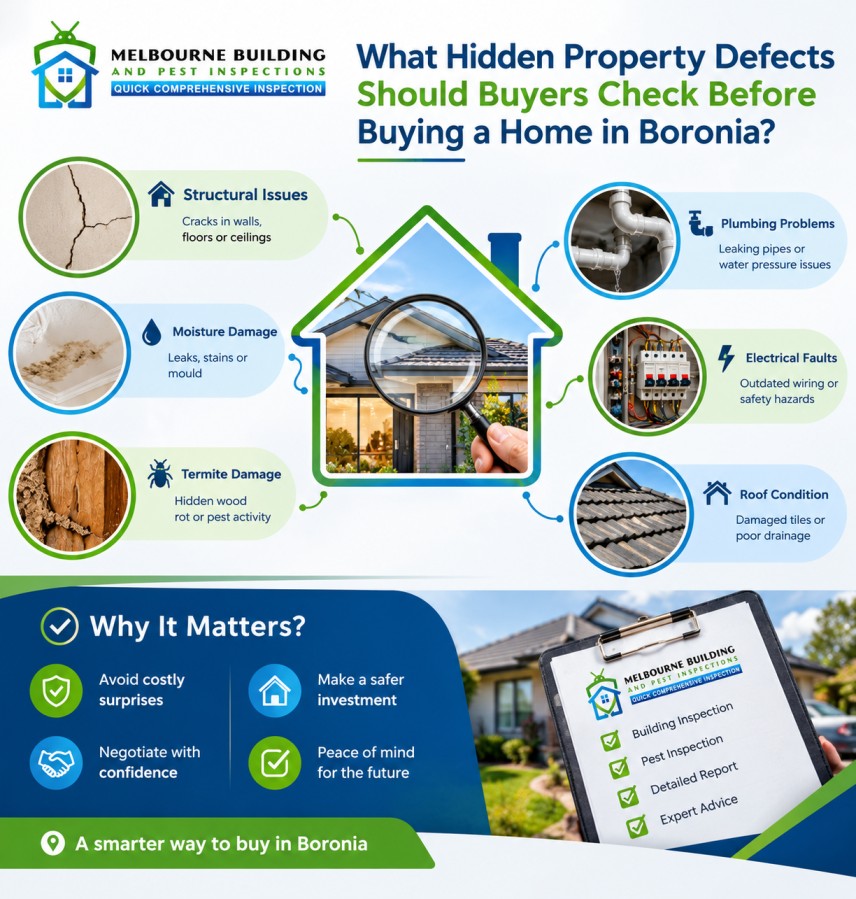
The pest side of a Building & Pest Inspection Boronia follows AS 4349.3. The outer east is a known high-risk area for termites because of its bushland, big trees and damp soil.
A thorough termite inspection Boronia check covers every accessible part of the home and garden. The inspector looks for:
Here is a typical case. A family was buying a home where a past owner had turned the old carport into a rumpus room. The conversion had no proper termite barrier, and the timber frame sat close to garden soil. The inspector found termite damage in the door architraves of that room, while the original house showed no activity. Otherwise, the family would never have known.
In Victoria, there is no cooling-off period when you buy at auction. Once the hammer falls, the contract is binding, and any defect you find afterwards becomes your problem. That makes a Pre-Auction Building Inspection Boronia one of the most important steps before you bid.
Book your inspection at least five days before auction day. That gives you time to read the report, talk to the inspector and get repair advice if a major defect comes up. The team at Melbourne Building and Pest Inspections often sees buyers book in the last two days. That leaves no time to act on the findings.
A good pre-purchase building inspection Boronia report should do more than list problems. It should help you make a decision. Look for these features:
Older homes in Boronia have plenty of charm, but Hidden Property Defects in Boronia Homes are common and easy to miss. In short, musty wardrobes, cornice cracks, soft floors and converted carports all have stories to tell.
A detailed Building & Pest Inspection Boronia reads those clues and tells you what they mean before you sign or bid. Book early, make sure every area is accessible and read the full report. For clear, independent advice from inspectors who know the foothills and its homes, Melbourne Building and Pest Inspections can help you buy with confidence.
The most common Hidden Property Defects in Boronia Homes include subfloor damp, rotted timber under new floors, mould behind built-in wardrobes, footing movement and termite damage. Older homes also often have poorly built extensions, enclosed verandahs without proper footings and leaking chimney flashings. The cool, damp foothills climate makes moisture-related defects especially common. Most of these issues stay hidden until a trained inspector checks the subfloor, roof space and wet areas.
A Building & Pest Inspection Boronia on a typical three or four bedroom home takes about 90 minutes to two hours on site. However, homes with extensions, split levels, large subfloors or outbuildings can take longer. Most inspectors send the written report within 24 hours, often on the same day. If you have an auction or contract deadline, mention it when you book so the inspection and report fit your timeline.
Book at least five to seven days before auction day. This gives the inspector time to fit you in and gives you time to review the report. A Pre-Auction Building Inspection Boronia is only useful if you can act on it. For example, you may need repair advice, a second opinion or time to adjust your bidding limit. Leaving it to the final day often means bidding without fully understanding the home’s condition.
A standard Building Inspection Boronia is visual and non-invasive, so the inspector cannot remove floors or linings. However, moisture meters, thermal cameras and subfloor access help reveal what sits behind and below surfaces. In particular, soft spots, high moisture readings and stains all point to hidden issues. If the inspector suspects a deeper problem, the report will recommend further investigation, which needs the vendor’s written permission.
Stay calm and gather facts. First, ask the inspector whether the activity is live or old, where the damage is and whether it affects the frame. Then get a licensed pest manager to recommend treatment and a builder to assess repairs. With that advice, you can negotiate the price, ask the vendor to treat and repair before settlement, or walk away. Never ignore termite findings, as untreated activity can spread fast.